
L-Carnitine Product Description
L-Carnitine is a naturally occurring compound derived from amino acids that plays an essential role in energy metabolism. It functions primarily as a transporter molecule for long-chain fatty acids, shuttling them from the cytoplasm into mitochondria where they can be oxidized to produce energy.
Chemically, L-carnitine is known as 3-hydroxy-4-N-trimethylaminobutyrate. It exists in two stereoisomeric forms: L-carnitine (the biologically active form) and D-carnitine.
In biochemistry, L-carnitine:
- Facilitates the transport of activated long-chain fatty acids across the inner mitochondrial membrane
- Helps regulate the ratio of acyl-CoA to free CoA in mitochondria
- Participates in removing toxic compounds from mitochondria
- Is involved in branched-chain amino acid metabolism
Peptide Information
| Property | Value |
|---|---|
| Molecular Formula | C7H15NO3 |
| Molecular Weight | 161.2 g/mol |
| CAS Number | 541-15-1 |
| Synonyms | Levocarnitine, 541-15-1, (R)-Carnitine, Carnitor |
L-Carnitine Structure
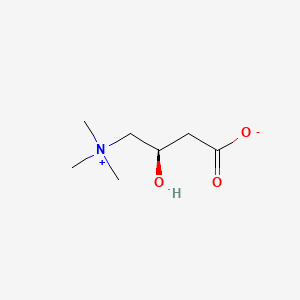
Source: PubChem